Cast iron frying pans—often simply labeled as cast iron skillets—are not merely nostalgic kitchen relics. They are precision instruments of thermodynamics. In an era of disposable non-stick coatings, the heavy duty cast iron pan remains a carbon-steel powerhouse capable of everything from high-heat searing to artisanal oven baking.
However, the modern market presents a paradox of choice. Do you opt for the budget-friendly reliability of a pre seasoned cast iron skillet, the vibrant convenience of an enameled cast iron skillet, or the boutique performance of a smooth surface cast iron pan? This guide moves beyond the marketing fluff to analyze the physics, data, and long-term value of these kitchen workhorses.
Thermodynamics: Why Cast Iron Rules the Kitchen
To understand why a 10 inch cast iron skillet is superior for browning, we must look at the physics of heat. Cast iron is often misunderstood as a "fast" heater. In reality, it has relatively low thermal conductivity compared to copper or aluminum. Its true power lies in Thermal Mass and Emissivity.
Once a cast iron skillet reaches its target temperature, it stays there. When a cold protein hits the surface, the temperature drop is negligible. This ensures a continuous Maillard reaction rather than steaming the meat in its own juices.
Material Performance Metrics
| Property |
Cast Iron |
Stainless Steel |
Aluminum (Non-stick) |
| Thermal Conductivity |
~52 W/(m·K) |
~15 W/(m·K) |
~237 W/(m·K) |
| Volumetric Heat Capacity |
~3.5 J/cm³·K |
~3.9 J/cm³·K |
~2.4 J/cm³·K |
| Heat Retention |
Extremely High |
Moderate |
Low |
| Emissivity Rating |
0.64 |
0.07 |
0.04 |
The high emissivity of cast iron (0.64) means it radiates more infrared heat to the food's surface even without direct contact, cooking the interior of thick steaks more efficiently than shiny stainless steel.
Navigating the Surface: Rough vs. Smooth Finish
The finish of a skillet dictates your daily cooking experience. Not all cast iron is cast equal.
1. The Traditional "Pebbly" Finish
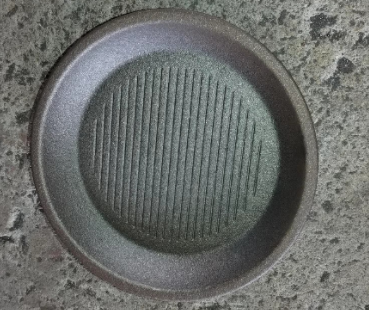
Most mass-produced pre seasoned cast iron skillet options feature a slightly rough, "sand-blasted" texture. This texture actually helps "grip" the initial layers of seasoning (polymerized fats) during the factory process. Over months of use, these micro-craters fill with carbonized oil, eventually becoming smooth.
2. The Smooth Surface Cast Iron Pan
Premium heirloom brands often CNC-machine or hand-polish the interior to a mirror finish. A smooth surface cast iron pan offers superior non-stick performance out of the box. It is the ideal choice for delicate tasks like over-easy eggs or searing scallops.
Surface Comparison Matrix
| Feature |
Rough Textured Finish |
Smooth Polished Surface |
| Initial Stick Resistance |
Moderate |
High |
| Seasoning Adhesion |
Easier/Faster |
Requires precise technique |
| Cleaning Ease |
Moderate |
Excellent |
| Market Positioning |
Budget-friendly (Daily Driver) |
Premium (Heirloom Investment) |
Finding Your Fit: Dimensions and Ergonomics
Choosing a heavy duty cast iron pan is as much about gravity as it is about diameter. A pan that is too heavy for your wrist becomes a "cabinet queen"—rarely used and prone to neglect.
Recommended Sizes by Use Case
| Diameter |
Total Weight (Approx.) |
Ideal Serving Size |
Best Use Case |
| 8 inch |
1.5 - 1.8 kg |
1 Person |
Single eggs, side dishes |
| 10 inch |
2.2 - 2.8 kg |
1-2 People |
The Gold Standard |
| 12 inch |
3.2 - 4.5 kg |
3-4 People |
Family-sized steaks, pizzas |
Critical Design Feature: When shopping for a 12-inch model, ensure it includes a Helper Handle. This secondary small handle allows for safe, two-handed lifting.
The Science of Seasoning (Polymerization)
The term "seasoning" is often misunderstood as flavor. In chemical terms, it is fat polymerization. When you heat an unsaturated fat on a pre seasoned cast iron skillet to its smoke point, the individual lipid molecules cross-link into a long-chain polymer.
Heat + Unsaturated Fat + Iron Surface = Hydrophobic Polymer Film
This creates a hard, glass-like coating that is naturally non-stick. Modern data suggests that 75% of first-time buyers prefer a pre-seasoned model to avoid the steep learning curve of initial seasoning.
The Total Cost of Ownership (TCO) Analysis
While a high-quality heavy duty cast iron pan may have a higher upfront cost than a teflon-coated pan, the TCO over a decade is unmatched.
| Cookware Type |
Avg. Price |
Estimated Lifespan |
Replacement Cycle |
| Ceramic/Non-stick |
$30 - $50 |
1-2 Years |
High (Wasteful) |
| Stainless Steel |
$80 - $150 |
10-20 Years |
Rare |
| Cast Iron Skillet |
$40 - $180 |
100+ Years |
Zero (Generational) |
Purchasing a 10 inch pre seasoned cast iron skillet is not a grocery expense; it is a one-time capital investment.
Selection Summary
To streamline your search, use these specific targeted keywords:
- "Cast iron skillet 10 inch" – For the most balanced heat-to-weight ratio.
- "Pre seasoned cast iron skillet" – For immediate out-of-the-box cooking.
- "Enameled cast iron frying pan" – If your diet consists of heavy tomato or wine-based braises.
- "Smooth surface cast iron pan" – For those seeking the ultimate egg-sliding performance.
A well-chosen heavy duty cast iron pan doesn’t just expand your recipe book; it changes how you interact with heat. It is a tactile, reliable partner that rewards every bit of care you give it with a lifetime of perfect crusts and consistent browning.
Would you like me to generate a specific 12-month seasoning maintenance schedule or a comparison of the best high-smoke-point oils for your new skillet?





 IPv6 network supported