
Contact Number

+86 -13959617257
What Are You Looking For?
1
Blog
Home |

Blog

  • Can a Cast Iron Crucible Be Used for Melting Aluminum? Can a Cast Iron Crucible Be Used for Melting Aluminum?
    Mar 12, 2026

    In small foundries, metal workshops, and hobby casting setups, one common question is whether a cast iron crucible for melting aluminum is a suitable choice. Aluminum has a relatively low melting point compared with most metals, so many different types of metal melting crucibles can technically handle the temperature. However, the performance, durability, and cost of the crucible depend heavily on the material used.


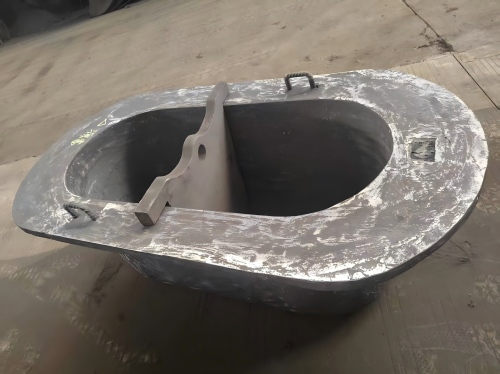
    A cast iron crucible is often selected for aluminum melting because of its strong structure, stable heat retention, and relatively low cost. When used correctly, it can work efficiently in propane furnaces, charcoal furnaces, and small gas-fired melting systems. For workshops producing aluminum parts in small batches, this type of aluminum melting crucible offers a practical and durable solution.


    Why Cast Iron Crucibles Are Suitable for Aluminum

    Aluminum melts at approximately 660 °C (1220 °F), which is far below the temperature limits of most iron-based materials. Cast iron has a melting point of roughly 1150–1200 °C, meaning it can easily tolerate the temperature range required for aluminum melting without structural failure.

    Another advantage of a cast iron crucible for melting aluminum is thermal stability. Cast iron stores heat well and distributes it evenly, helping maintain consistent molten metal temperature during the casting process.

    The main reasons many workshops still use cast iron crucibles include:

    • Strong mechanical structure

    • Excellent heat retention

    • Resistance to deformation under heat

    • Compatibility with propane or charcoal furnaces

    • Low manufacturing and replacement cost

    These characteristics make cast iron crucibles widely used in small foundries and DIY casting environments.


    Typical Specifications of a Cast Iron Crucible

    In industrial supply markets, cast iron metal melting crucibles are available in different sizes depending on furnace capacity and melting demand. The following table shows common specifications.

    Parameter Typical Range
    Material High-carbon cast iron
    Aluminum capacity 0.5 kg – 400 kg
    Working temperature 650 °C – 700 °C
    Furnace compatibility Propane / charcoal / gas
    Heat resistance Up to ~1100 °C
    Average service life 50–150 melting cycles

    For hobby casting, smaller crucibles with 1–10 kg aluminum capacity are common. Industrial workshops may use larger crucibles capable of holding 50–400 kg molten aluminum.


    Cast Iron Crucible vs Other Crucible Materials

    Although a cast iron crucible for melting aluminum works well, other materials are also commonly used in metal casting. Each material has different advantages.

    Crucible Material Advantages Limitations Typical Use
    Cast Iron Strong, low cost, durable Can oxidize over time Aluminum melting
    Graphite Excellent thermal shock resistance Higher price Precious metals, aluminum
    Ceramic High temperature tolerance Brittle under impact Laboratory melting
    Stainless Steel Corrosion resistant Poor heat retention Zinc or alloy melting

    In many cases, workshops choose cast iron when melting pure aluminum or simple aluminum alloys, especially when cost efficiency is a priority.

    If melting zinc, magnesium, or mixed alloys, stainless steel crucibles are often recommended due to better corrosion resistance.


    Heating Guidelines for Aluminum Melting

    Even though cast iron handles heat well, proper heating procedures are still necessary to extend the lifespan of the aluminum melting crucible. Rapid temperature changes can cause thermal stress and cracking.

    A controlled heating process is recommended.

    Stage Temperature Recommended Action
    Preheating 100 °C Apply anti-corrosion coating
    Initial heating 100–400 °C Increase temperature gradually
    Working range 660–700 °C Maintain stable melting
    Cooling stage Below 200 °C Allow furnace to cool naturally

    A commonly suggested rule is to limit the heating rate to less than 100 °C per hour during the initial stage. This reduces thermal stress and helps the crucible expand evenly.

    The crucible temperature should generally remain below 700 °C during aluminum melting. Operating significantly above this temperature can accelerate oxidation and shorten the service life of the crucible.


    Operational Tips to Extend Crucible Life

    Proper operation is often the difference between a crucible lasting a few weeks or several months. Foundry technicians usually follow a few simple practices when working with a cast iron metal melting crucible.

    1. Preheat Before First Use

    For the first melting cycle or after a long shutdown, the crucible should be slowly heated to around 100 ± 20 °C. At this stage, a thin anti-corrosion coating can be applied to protect the surface from molten aluminum.

    2. Control Molten Metal Level

    Before shutting down the furnace, it is recommended that the remaining molten aluminum inside the crucible should be less than 40 mm deep. This prevents excessive thermal stress during cooling.

    3. Avoid Overheating

    Although cast iron can tolerate high temperatures, continuous overheating above 700 °C may cause surface scaling or metal fatigue.

    4. Clean Residues Regularly

    Oxide slag and impurities should be removed after each melting cycle. This helps maintain heat transfer efficiency and reduces corrosion.


    Production Methods for Cast Iron Crucibles

    Modern cast iron crucibles for melting aluminum are typically produced using resin sand casting technology. This manufacturing process provides better dimensional accuracy and improved surface quality compared with traditional sand casting.

    Key production steps include:

    1. Pattern design and mold preparation

    2. Resin sand mold casting

    3. Molten iron pouring

    4. Controlled cooling

    5. Surface grinding and finishing

    6. Quality inspection

    Resin sand casting allows manufacturers to produce crucibles with uniform wall thickness, which improves heat distribution during melting.


    When a Cast Iron Crucible Is the Right Choice

    A cast iron crucible is often the right solution when the application involves:

    • Small or medium aluminum melting batches

    • Propane or charcoal furnaces

    • Cost-sensitive foundry operations

    • Repeated heating cycles in workshop environments

    For many small foundries, it provides a reliable balance between strength, cost efficiency, and heat performance.

    When used with proper heating control and regular maintenance, a well-manufactured cast iron crucible for melting aluminum can deliver stable performance across many casting cycles, making it a practical tool in both professional foundries and hobby metal casting setups.
     
     
    Read More
  • Can a Stainless Steel Crucible Be Used for Melting Zinc Alloy? Can a Stainless Steel Crucible Be Used for Melting Zinc Alloy?
    Mar 18, 2026

    A stainless steel crucible is commonly described as a metal container made from alloys such as stainless steel, designed to heat or melt substances under controlled conditions. While it is widely available and relatively inexpensive, its actual performance in metal melting—especially for zinc alloys—depends on several technical factors that are often overlooked.


    Where Does a Stainless Steel Crucible Actually Work?

    In practice, a stainless steel crucible for metal melting is suitable under specific, limited conditions. It performs reasonably well when dealing with low-melting-point metals and short-duration heating cycles.


    Typical acceptable applications include:

    • Zinc and zinc-based alloys (~420 °C melting point)

    • Tin and lead melting

    • Aluminum melting (short-term exposure only)

    • Small batch processing (laboratory or hobby scale)

    • Situations where slight contamination is not critical


    Common material grades used in these crucibles include:

    Grade Key Characteristics Typical Use
    304 Stainless Steel heat resistance, cost-effective General-purpose
    316 Stainless Steel Improved corrosion resistance Better for reactive environments

    Because of these properties, many entry-level users search for terms like “heat resistant stainless steel crucible” or “stainless steel crucible for zinc melting” when starting out.


    Temperature Capability and Limits

    Understanding temperature limits is critical when selecting any crucible.

    Material Recommended Continuous Temp Short-Term Max Temp
    304 Stainless Steel ~600 °C ~800 °C
    316 Stainless Steel ~650 °C ~850 °C

    Zinc melts at approximately 420 °C, which falls comfortably within this range. This is why a stainless steel crucible for zinc alloy can technically function without immediate failure.


    However, temperature alone does not determine long-term usability.


    Key Limitations You Should Not Ignore

    Despite being labeled as “heat-resistant,” stainless steel is not considered a true high-performance crucible material. Several physical and chemical limitations come into play during repeated use.


    1. Thermal Degradation Over Time

    At elevated temperatures:

    • Mechanical strength decreases

    • Metal softening begins above ~700 °C

    • Surface oxidation accelerates

    This leads to deformation, especially in thinner crucibles.


    2. Risk of Metal Contamination

    When molten zinc comes into contact with steel:

    • Iron (Fe) can dissolve into the melt

    • Alloy composition may shift

    • Mechanical properties of the final casting may degrade

    This is particularly important in applications requiring consistent alloy quality.


    3. Limited Service Life

    Compared to professional materials like graphite, stainless steel wears out quickly.

    Crucible Type Estimated Lifespan (Cycles)
    Stainless Steel Crucible 5–20 uses
    Graphite Crucible 50–200 uses
    Ceramic Crucible 30–100 uses

    This makes stainless steel more of a short-term solution rather than a long-term investment.


    Material Comparison for Better Decision-Making

    Property Stainless Steel Graphite Ceramic
    Max Temperature Medium High High
    Thermal Shock Resistance Low Excellent Moderate
    Chemical Stability Moderate Excellent Excellent
    Cost Low Medium Medium
    Durability Low High Medium

    From this comparison, it becomes clear why professionals rarely rely on stainless steel for continuous metal melting.


    When Do People Still Use Stainless Steel Crucibles?

    Despite the drawbacks, stainless steel crucibles remain popular in certain scenarios:

    • DIY metal casting projects

    • Temporary or emergency setups

    • Budget-limited operations

    • Initial testing before scaling up

    Search trends like “cheap stainless steel crucible for melting metal” reflect this demand.


    When Should You Avoid Using One?

    There are clear situations where a stainless steel crucible is not appropriate:

    • Repeated high-temperature cycles

    • Melting copper, brass, or bronze (>900 °C)

    • Industrial or production-level casting

    • High-purity alloy requirements

    In these cases, switching to graphite or ceramic is not optional—it is necessary.


    How to Choose a Better Stainless Steel Crucible

    If you still plan to use one, selecting the right specifications can improve performance.

    ✔ Material Grade

    • Choose 316 stainless steel crucible for better corrosion resistance

    • Avoid unknown or low-grade alloys

    ✔ Wall Thickness

    • ≥2 mm thickness improves durability

    • Thin walls are prone to warping

    ✔ Capacity Selection

    Capacity Recommended Use
    50–100 ml Lab testing
    100–300 ml Small batch melting
    300+ ml DIY casting


    Practical Tips to Extend Lifespan

    Even a basic stainless steel melting crucible can last longer with proper handling:

    • Avoid overheating beyond necessary levels

    • Do not heat an empty crucible (prevents oxidation stress)

    • Allow gradual cooling instead of rapid quenching

    • Clean residue after each use

    These small adjustments can significantly delay material fatigue.


    Real-World Perspective

    In real-world applications, stainless steel crucibles often serve as a stepping stone. Many users begin with them due to accessibility and cost, then transition to graphite once they encounter limitations in durability or metal quality.


    For zinc alloy melting specifically, the material works—just not indefinitely. Understanding where it fits in the process helps avoid unnecessary costs and inconsistent results.


    Read More
  • Are cast iron round frying pans safe to use?
    Oct 30, 2025

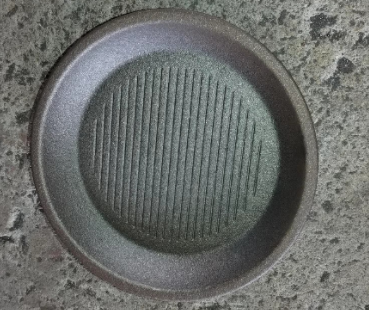
    Yes, cast iron round frying skillet pans are safe to use and are actually known for being extremely durable and versatile. They’re great for high-heat cooking, searing, frying, and even baking. However, there are a few things to keep in mind to ensure they stay in good condition and are safe:

    1. Proper Seasoning: Cast iron pans need to be properly seasoned to maintain their non-stick surface and prevent rust. A well-seasoned pan can handle high temperatures and adds flavor to food. If your pan starts to rust or the seasoning wears off, you’ll need to reseason it.

    2. Handling with Care: Cast iron can get extremely hot, so always use an oven mitt or pot holder when handling the pan to avoid burns.

    3. Avoiding Abrasive Cleaning: After use, avoid harsh scrubbing or soaking the pan, as it can damage the seasoning. A little hot water and a stiff brush are usually enough. If you do need to clean it more thoroughly, you can reapply some oil to help maintain the seasoning.

    4. Preheating: Cast iron pans should be preheated slowly, especially if they are cold. Rapid temperature changes can cause them to crack or warp.

    5. Storing Properly: After use, make sure the pan is completely dry before storing it to avoid rusting. You can also apply a thin layer of oil to prevent moisture from getting in.


    So, if you take care of it, a cast iron round frying pan is not only safe to use, but it can last for generations!

    Read More
  • How Does Metal Casting Work?
    Nov 04, 2022

    The metal casting process can create anything from tiny fasteners to large industrial components, all through a five-step procedure. It happens by creating a pattern and making a mold, melting and transferring the metal and finishing, cleaning, polish and inspecting the casting. While metal casting is a straightforward practice, it requires specialized skills and techniques to perfect.

    At Hengchang Foundry, we have the mastery and technology to form objects of various sizes for different industries like heavy equipment and transportation. No matter the complexity of the parts you require, our professional team can produce tailored castings to deliver unique parts for your application.

    What is the metal casting process? Continue reading to learn what to know about metal casting and how our metal casting services work.

    1. MAKING THE PATTERN

    When talking about a pattern, we aren’t referencing one you trace on a piece of paper. Instead, metal casting foundries refer to patterns as a replica of the object they’re casting. This pattern helps form the mold cavity, which can be made of wood, plastic, aluminum and many other suitable materials. Making a pattern is a crucial first step because the accuracy of the mold determines the accuracy of the final product.

    The four steps in producing a precise pattern include:

    1. Shaping the mold cavity
    2. Adapting the properties of the metal cast
    3. Referencing accurate dimensions
    4. Creating a way for the liquid metal to enter the mold

    Depending on the type of material being poured into each mold, the final, solid product will distort to a certain degree. For example, it may shrink compared to the original size of the mold. This is why each pattern has allowances for slight alterations. Additionally, patterns require a draft, or a vertical tapered wall, where professionals can extract the pattern without tampering with the molded product.

    municipal ductile iron cover

    2. CREATING THE MOLD

    It’s now time to create the mold, which is a hollow shape that will form the metal later on in the process. While some molds are expendable, others are nonexpendable.

    An expendable mold means you can’t use it again. In that case, materials like sand, plaster foam or plastic make up the mold, and they’re destroyed during the casting process. Alternatively, you can use nonexpendable molds indefinitely, as they’re often made of aluminium.

    Both expendable and nonexpendable molds can support different pattern complexities and materials.

    3. MELTING AND TRANSFERING THE METAL

    While we use a multitude of materials for metal casting, they all fall under one of two categories — ferrous and non-ferrous metals. The metals used in metal casting can include iron, zinc, aluminum, tin, copper, lead alloys and others. While a ferrous metal contains malleable iron or steel, a non-ferrous metal contains nonmalleable metal, such as copper, nickel or aluminum.

    After selecting the appropriate metal type, we load it into the furnace where temperatures rise until it reaches the material’s melting point. At Warner Brothers Foundry Company, we use gas furnaces during the metal casting process, though there are two other common types of furnaces for metal casting — electric arc and induction.

    Using electric furnaces is our preferred method for metal casting because it burns cleanly and efficiently. Electric furnaces also allow us to heat the metal to the necessary temperatures without using high amounts of electricity. Electric furnaces are more efficient for our process, which keeps costs lower on our end and allows us to offer lower prices on your end.

    Once the material melts down, it’s transferred to a large ladle before it reaches the mold. Through gates and risers, or openings in the mold, workers or machines pour the liquid material into the mold. Once it takes shape, solidifies and cools, we eject the casting from the mold, removing excess metal from the gate and rider system before moving to the next step in the process.

    Understanding how long metal casting takes depends on the material — some may cool within minutes, and others take several days.

    4. FINISHING AND CLEANING EACH PART

    This stage involves making the final touches and cleaning each individual part. At Hengchang Foundry Company, we go in and remove excess metal parts and begin the cleaning process, using different tools to clear away particles and dirt. The final product is the same proportion and shape as the original pattern used during step one.

    Additionally, some products may require a heat treatment, such as rail clamp, hydraulic cylinder, buffer. This process alters the properties of the material through a heating and cooling technique where the metal becomes more resilient. These treatments are ideal for applications that may endure extreme weight, wet environments or freezing temperatures.

    5. INSPECTING THE CASTING

    The metal casting process ends with an inspection to ensure everything is complete and up to our standards. During the final stage, we check the part’s physical structure and integrity to ensure it’ll hold up and perform the expected job.

    There are destructive and nondestructive testing methods, which are put in place depending on the casting’s specifications. In particular, visual inspections include looking for cracks, accuracy and surface finishes, and more in-depth testing checks tensile strength, hardness and ductility, among other components.

    No matter the industry, we inspect everything from trailer hitches and industrial equipment to small automotive parts. In the end, you’ll have a durable component that’s suited to your unique needs and operations.

    Read More
  • Metal casting foundry
    Oct 28, 2022

    The global metal casting market will be worth $12.38 billion in 2023. It is expected to grow at a CAGR of 5.3% from 2022 to 2032. With the booming castings industry, the market is witnessing an increasing demand for metal casting companies. The global casting market is currently characterized by the presence of diverse international and regional manufacturers. Metal casting companies continuously invest in developing new technologies and products to remain cost-effective and competitive. It is a good signal for the foundry like us, who export tailored valve, ring, ditch cover, agitator, etc for our customers

    Read More
  • The Change For The Tensile Strength Of Gray Ductile Iron
    May 03, 2023

    In the industry, it is customary to decide whether the gray ductile iron is qualified not depends on whether its tensile strength is qualified. While the tensile strength of the gray ductile Iron is determined by the carbon content. In addition to ensuring the basic chemical composition is qualified. With the increase of carbon content, the tensile strength will decrease. From the basic characteristics of gray nodular iron castings, it can be seen that if a small amount of carbon is added to the raw materials, the tensile strength can be improved. Therefore, in the carbon content of gray iron castings, try to make the carbon content reach 2.6% - 3.6%, and the silicon content is 1.2% - 33.0%. It is necessary to add some manganese properly when the wall thickness of gray iron castings is determined. At the same time, alloying method can also be used to improve the tensile strength of gray nodular iron castings, or adding a proper amount of microalloys, such as chromium, molybdenum, tin and other elements. It is also one of the ways to improve the tensile strength of gray iron castings. But the corresponding molten iron inoculation should be done well. It should be noted that carbon and silicon affect the strength of gray nodular iron castings in different ways. With high carbon content, it will increases the graphite content, promotes the coarsening of graphite flakes, relatively reduces the austenite dendrite content, and reduces the tensile strength. Therefore, when the carbon equivalent is constant, increasing the silicon content, the carbon equivalent is relatively reduced, the graphite content is correspondingly reduced. And the primary austenite content is increased. The Silicon with ferrite can strengthen and improve the strength. However, silicon can increase the eutectoid transition temperature and coarsen the pearlite. In a word, if the carbon equivalent is low, increasing the ratio of silicon to carbon, or reducing the ratio of silicon to carbon properly. The tensile strength of gray nodular iron castings will be improved. But if the ratio of silicon to carbon is too low, it is easy to produce white spots. In this case, inoculation treatment is needed.

    Read More
  • What is the difference between ductile iron and cast iron?
    Oct 12, 2022

    Ductile iron is an alloy of cast iron or grey iron in which the carbon forms into nodules as opposed to plates as it is in grey iron. This makes the metal more ductile than cast iron hence the name.

    Ductile iron has greater strength and ductility than gray iron. Those properties allow it to be used effectively in a wide variety of industrial applications, including pipe, automotive components, wheels, gear boxes, pump housings, machine frames for the wind-power industry, and many more.

    Read More
  • Preliminary Raw Casting Inspect
    Oct 21, 2022

    After produce the items, the preliminary casting inspection will use the visual. This inspection way involves using the human eye to detect surface defects, tears, misruns, cracks, cold shuts, gas evolution, molding flaws, metal penetration, slag adhesions and sand inclusions. This inspection is essential to ensure the casting adheres to visual acceptance standards. Inspection results should be documented and recorded, and every surface irregularity should be classified. Any castings with visually detected defects should be picked out and not moved to next steps or delivered to customers. The inspection way always use in the casting parts with different material, such as QT450-12, QT500-7,QT600-3 etc

    Read More
  • Sand Casting Process
    Oct 28, 2022

    The Sand Casting Process

    Even a child playing at the beach or in a sandbox can immediately grasp how sand casting works. When you see a child mixing water into sand to make it easier to shape it into a sand castle, that child is demonstrating how combining some sand and water works so beautifully for creating a shape. 

    At its simplest, the sand casting process for a casting foundry  is nothing more than making a cavity in the sand in the desired shape, pouring molten metal into the cavity and letting it cool. Humankind has been doing this for thousands of years. Sand is heat resistant and readily available almost anywhere on earth. 

    If you’ve ever noticed the way footprints made in wet sand hold their shape, you can easily imagine what likely inspired the first ancient metal workers to use wet sand to shape their cast metals. Everything after that has just refined and perfected the basic process.

    What Is Green Sand Casting?

    The term green sand has nothing to do with the color of the sand casting material. It means there’s some moisture in the sand; when the sand is said to be green, it means the mold has not been baked or dried. This kind of molding sand is a very economical and versatile material. When desired, the foundry can add select additives can make the green sand more ideal for a specific purpose. Green sand is used in the most common sand casting processes.

    How Do You Make Sand Casting Molds?

    Sand casting equipment within a foundry can be very basic or quite advanced, depending on the items being made. Typically, the sand is placed in a mold box, which is known as a flask. The pattern, or model, is placed in the prepared sand inside the flask to make a mold. The pattern is removed, leaving behind a perfect shape in the sand. The mold is filled with molten metal, which is allowed to cool. When the metal is sufficiently cooled, the sand mold can be broken away.

    More complicated items can be cast by combining an upper and a lower section. The upper mold is known as the cope, while the bottom half is known as the drag. Once the cope and drag are ready, they can be fastened together so that molten metal can be poured into the resulting cavity. Even further detailing is possible with the addition of a core. A core is something placed inside the mold to form a negative space that no molten metal will fill. An example would be the middle of an engine block or any other cast item that requires a hollow space.

    Castings made with cope and drag must provide a way to introduce the molten metal into the mold. It can be a simple vertical passage, known as a sprue. The sprue and its channel will fill with molten metal that will solidify and will need to be machined off to get the item to its final design.

    How Does The Sand Casting Process Work?

    In the modern foundry or casting industry, the knowledge of how each alloy will react with each potential form of mold and each potential additive allows the worker to make choices to give the finished item the desired characteristics. Metal casting is both an art and a science.

    As the molten metal cools and solidifies, it will give off gasses. The molds are designed to take that into consideration and when necessary, will be constructed to allow the gasses to escape throughout the sand casting process.

    What Is Sand Casting Used For?

    Chances are good that you’re less than 10 feet from at least one cast item right now that has been through the sand casting process. There’s hardly an industry that doesn’t have some kind of need for cast materials. Some cast items are large and can weigh hundreds of pounds, while other cast items are tiny and intricate.

    What Are Some Common Metals Used in Sand Casting?

    Almost any kind of metal can be shaped using the right sand casting equipment. Grey iron and ductile iron very well.

    What Additives Are Common In Sand Casting?

    Modern manufacturers will usually add some water and other additives to the sand casting process to make it work better for various purposes. Different alloys and different items call for additives, including these common materials:

      • Clay: It could be bentonite clay (most likely calcium bentonite) or another kind of clay. For special delicate and high-detail items, such as jewelry, Delft clay, which is imported from the Netherlands, can be used.
      • Coal Dust: Also known as Sea Coal, this is added to produce a more even surface, to make it easier to get the cast item out of the mold. It also produces casts with fewer defects.
      • Corn Flour: Believe it or not, a little bit of corn flour added to the wet sand gives the sand greater strength and plasticity.
      • Dextrin: Dextrin, derived from corn starch, is used as a binder. It improves the dry surface strength of the sand.
      • Pitch: Made from soft coal, a little pitch added to the sand improves the surface finish.
      • Wood Flour: This material is combustible, which like other combustible additives helps create a space for the grains of sand to expand without changing the shape of the mold.
      • Silica Flour: This material is just finely ground sand that’s mixed into casting materials for a more durable mold. 

    What’s The Future In Sand Casting?

    Relatively new technology in today’s casting foundry is 3D printed patterns and molds.
    The latest 3D printing equipment is capable of manufacturing a sand mold and core in just a few hours. This can save considerable time and money in some cases. 

    Once the pattern is produced, sand casting proceeds as usual, but the ability to use a 3D printer to produce the pattern, molds and cores greatly speed up the process, potentially saving production costs and increasing the accuracy of the casting. If an example of the item to be sand cast already exists, it can easily be scanned to create the 3D model.

    Once the program for producing the sand mold and core is perfected, it can be reproduced as many times as desired. Such sand casting equipment is a growing part of the metal casting industry. The sand casting advances of today would no doubt amaze the master sand casters from a hundred years ago — not to mention those of a thousand years ago!

    Why Do Some Cast Items Require Machining?

    In some cases, an item produced through the sand casting process requires machining, painting, or another process to bring it to completion. Oftentimes, the item will have extraneous material necessary to make a good cast but not meant to be part of the finished design. At other times, fine detailing is needed and can be added after the cast is completed. Cast Technologies has a CNC machine shop on-site in order to deliver a finished product that meets your needs. This allows us to serve our customers better, as we take responsibility for all the processes the part requires to meet its design specifications.

    Read More
  • What Is Heat Treatment?
    Dec 15, 2022

    We have two quench furnace and a anneal furnace. For the castings parts with high class material, such as wheel brake wehd, piston cylinder, frame  etc. to make sure stable mechanical property, usually will be used with heat treatment.

    Heat treatment is a thermal process that accomplishes three primary improvements to the material properties of metal castings: 

    • Improving mechanical properties
    • Enhancing corrosion resistance
    • Reducing residual stresses

    The heat treatment process begins with heating the metal casting to the desired temperature before cooling the metal in a controlled way to achieve the desired improvements. This heating and cooling process “locks in” the final metal microstructure and the improved material properties.

    Why Heat Treatment?

    As outlined above heat treatment is used to achieve a variety of desired outcomes for a metal casting.  Heat treatment can also be designed to reduce hydrogen levels, simulate in-service conditions, restore mechanical properties, and reduce stresses after a project is welded.  These various outcomes are achieved with different heat treatment processes.  The overarching objective of heat treatment is to achieve customer specification requirements and comply with industry standards. 

    What Types Of Heat Treatment Are There?

    While there are a range of different heat treatment processes available at Hengchang, some are used more often than others.

    Homogenizing Heat Treatment:

    This process involves heating the metal casting in a furnace to an extremely hot temperature and holding for an extended period to improve chemical uniformity by diffusion.  Homogenization is sometimes employed as a pre-treatment to make subsequent heat treatments more effective.  

    Normalizing Heat Treatment:

    Normalizing is heating the metal casting to an elevated temperature above the transformation temperature and then air cooling it back to room temperature.  This process alters the microstructure to reduce the variation in hardness and ductility within the casting.  The temperatures and times are typically lower and shorter than for homogenization.  Normalizing is often followed by tempering.  Tempering is heating the metal casting to a temperature below the transformation temperature to lower the hardness and improve the ductility of the metal.  

    Hardening Heat Treatment And Quenching Heat Treatment:

    The use of this treatment results in an improvement in metal casting mechanical properties, related especially to increasing hardness or durability.  It is often used for steel parts.  Metal is heated to an elevated temperature (above the transformation temperature) and then rapidly cooled (quenched).  This causes the softer initial material to transform its structure into a stronger one.

    Quenching cools the metal casting after the initial heating process. The quench is typically performed in oil or water, depending on the material and specification requirements.  Tempering is the last step in the hardening and tempering process and is required after the quench.  It involves reheating the metal at a low temperature (below the transformation temperature) to achieve final specifications.  Tempering lowers the as-quenched hardness, restores ductility, and reduces stresses of fully hardened steel.

    Anneal Heat Treatment:

    Annealing is heating and holding the metal at an elevated temperature followed by furnace cooling to obtain the desired hardness.  This is typically performed on “hardenable” ferrous alloys  to reduce hardness, increase ductility, and improve the machinabilityof the casting.  This process is often used on tool steels, alloy steels, and martensitic stainless steels to allow for quick rough machining prior to any hardening and tempering operation.   

    Solution Anneal Heat Treatment:

    Solution annealing is heating and holding metal at an elevated temperature to cause constituents like carbides and undesirable phases to go into solid solution and then cooled rapidly to hold these constituents in solution.  This process improves mechanical properties and the corrosion resistance of an alloy.  Austenitic and duplex stainless steels are typically supplied in the solution annealed condition.   

    Stress Relieving Heat Treatment:

    Stress relieving is heating to a relatively low temperature and holding for a long enough time to reduce residual stress within the casting.  The process typically employs controlled heating and cooling rates to minimize the development of new stresses.  Stress relieving is often done after rough machining prior to tight-tolerance finish machining work. 


    Read More
  • Comparison Between Ferrous Metals and Non-ferrous Metals
    Apr 07, 2023

    From skyscrapers to naval propulsion stystems, from automotive parts to petrochemical furnace tubes, there is no shortage of real-world applications for metal.  Metals come in a wide range of structures, properties, and applications but are commonly organized into two categories: ferrous metals and non-ferrous metals.  Below we explain the definitions, common types, differences, and popular applications of both ferrous metals and non-ferrous metals.

    Ferrous Metals:

    A ferrous metal contains mostly iron.  Ferrous metals are common and make up the bulk of castings in the metal castings industry.  Typically, ferrous metals are stronger than non-ferrous metals and heat treatment can further improve their material properties


    Common Ferrous Metals:

    Common ferrous metals include:

    • Steel
    • Stainless Steel
    • Wrought Iron
    • Cast Iron
    • Low, Medium, and High Carbon Steel

    Non-Ferrous Metals:

    A non-ferrous metal is a metal that does not have iron.  Except for iron, all pure metals are non-ferrous.  Metal technology has continually developed throughout history, but natural non-ferrous metals still play a vital role for critical, real-world applications such as defense, process equipment and renewable energy .

    A prominent non-ferrous material is copper-based alloys – bronze and brass.  Brass is a copper-based alloy that has zinc as a principal element, while bronze does not have zinc or nickel as the principal element.  More on Bronzes and non-ferrous metals can be found here: What is Non-Ferrous Metal?

    Common Non-Ferrous Metals:

    • Bronze and brass
    • Aluminum
    • Lead
    • Nickel
    • Zinc
    • Gold
    • Silver

    Key Differences: Ferrous Vs. Non-Ferrous Metals

    Magnetism

    Iron is magnetic, so ferrous metals have magnetic properties.  Non-ferrous metals do not have magnetic properties. Iron has magnetic properties due to its electrons becoming easily aligned to a magnetic field.  This property allows ferrous metals to be ideal for electrical projects – a prime example is induction heating.

    Corrosion Resistance

    Ferrous metals are often not ideal for applications where corrosion is a concern. Iron reacts with water to form a layer called hydrated iron (III) oxide, commonly known as rust. One notable exception to ferrous metals is stainless steel. This material was designed, among other things, to provide corrosion resistance. 

    Non-ferrous metals form oxide layers that function as barriers to water.  These layers provide a high degree of corrosion resistance.  This is a major reason copper pipping has traditionally been used for water pipes in homes, for example.

    Strength

    Ferrous metals are typically stronger than non-ferrous metals. Steel is a prime example of one of the strongest metals. Combine that with its low cost and steel is a natural choice for building structures and other projects requiring high degrees of tensile strength. Titanium is stronger than other non-ferrous metals, but due to its high price, it typically makes for a poor selection for large projects like building structures.

    Common Applications

    Ferrous Metals Common Applications

    • Shaft sleeves
    • Heat exchangers
    • Pressure vessels
    • Calciners
    • Centrifuges
    • Hydraulic cylinders
    • Petrochemical components
    • Chemical & food processing equipment 
    • Pump & valve components
    • Catering Equipment
    • Train parts

    Non-Ferrous Metals Common Applications

    • Bearings
    • Bushings
    • Gears
    • Sleeves
    • Wear rings
    • Pump & valve components
    • Automotive engines
    • Fastener
    • Wiring kits
    • Pipes

    Ferrous Vs. Non-Ferrous Metals: Conclusions

    The differences between ferrous and non-ferrous metals are important, but that does not mean that the choice is clear for every project. It is critical to understand the various chemistries and how they will react to their application environment . Both ferrous and non-ferrous metals are vital to countless critical applications. We--Zhangzhou Hengchang are here to help with your project and identify the appropriate alloy for your specific application.

    Read More
  • What is a Foundry
    Jun 23, 2022

    Human beings left the Stone Age behind roughly 4,000 years ago when the Bronze Age began, although some foundries go back even further. The team at Cast Technologies takes great pride in coming from a long line of skilled craftsmen that reaches back to the ancient world. We are today using processes based on the same principles as those used by our ancient ancestors to radically change and modernize the world. While people might think of things like electricity, the printing press and computers as the building blocks of the contemporary world, the truth is our way of life rests to a very large degree on the work of foundries: Automotive, air travel and energy production are just three industries that heavily depend on cast items. You depend on multiple cast items every day of your life.

    Naturally, modern foundries bear little resemblance to the primitive technologies that man invented to make weapons and tools from simple bronze alloys, but the ideas are much the same: Melt a mixture of metals together and pour the liquid into some kind of mold. Making a bronze spearhead uses much the same technology still used for making parts for a power generator.

    The ancients made things like weapons and plows, allowing them to put aside their more primitive stone tools. Today, foundries make an almost infinite number of items we rely on in modern life, including car engines, pipes, chains, aircraft parts, tools and many other metal components. Of course, foundries today aren’t limited to bronze, but can cast countless metal alloys depending on the characteristics required by the finished item. 


    How Has Foundry Technology Changed?

    Foundries have evolved considerably, thanks to advances in technology and the science of metallurgy. Initially, charcoal fires were used to power little furnaces hot enough to melt metal, but now gas or electric heat are used to power more advanced furnaces. 

    Early foundries were a dangerous work environment, but modernization and mechanization have made them much less hazardous. For example, pouring molten metals into molds via a robot or other automated equipment is much safer than pouring by hand using a ladle. 

    Another change in foundries involves the methods used to placing the molten metals into molds. Traditional gravity pours are still used, but there are other methods available now, including vacuum or pressurized gas pours.


    A Simple Explanation of the Foundry Process

    Imagine you are living a few thousand years ago and you wanted to cast a simple item, such as a flat disk, in metal. The easiest method would be something called sand casting.

    You might start by carving something called a pattern from wood. Once you had your desired shape just as you wanted it, you could sink it into a sandpit and then — very carefully! — you would remove your wooden model from the sand. Done right, this would leave a perfect impression of your wooden model in the sand. 

    Next, you would prepare your metal according to the characteristics you wanted your finished item to have. Perhaps you’d follow the ancient recipe of one part tin to nine parts copper. You’d need a small furnace, a clay melting pot and of course a hot charcoal fire for melting. Yes, primitive charcoal-fired furnaces can indeed get hot enough to melt copper and tin together, although it’s much easier to achieve the necessary temperatures in a modern foundry.

    Once your metals had melted together, you’d carefully pour your mixture into the sand cavity and let the metal cool. Finally, you’d remove the solidified metal disk from the sand. If all went well, you’d have a perfect metal copy of your wooden disk.

    Now let’s imagine you wanted to make a more complex casting. You might want to make your item in two different sections, a top and bottom. This is called a split pattern, and the upper section is called the cope, while the bottom section is called the drag. 

    Even more complex designs can be made using something called a core. The core is inserted into the mold to create a hollow area. 

    Now imagine you needed your item to have a smoother finish. You could smooth it out by sanding or grinding. Today, you might sandblast the surface, sand it or machine it smooth with a grinder. This same general process is used in making everything from the simplest tiny items, such as jewelry, to the most complex and large parts weighing hundreds of pounds, such as wind turbine blades.

    After the item comes out of the mold, further processes may be used if necessary. Cast Technologies has an on-site machine shop to add the finishing touches to any component.

    Read More
1 2
A total of2pages
leave a message
leave a message
If you are interested in our products and want to know more details,please leave a message here,we will reply you as soon as we can.

home

products

Skype

WhatsApp